

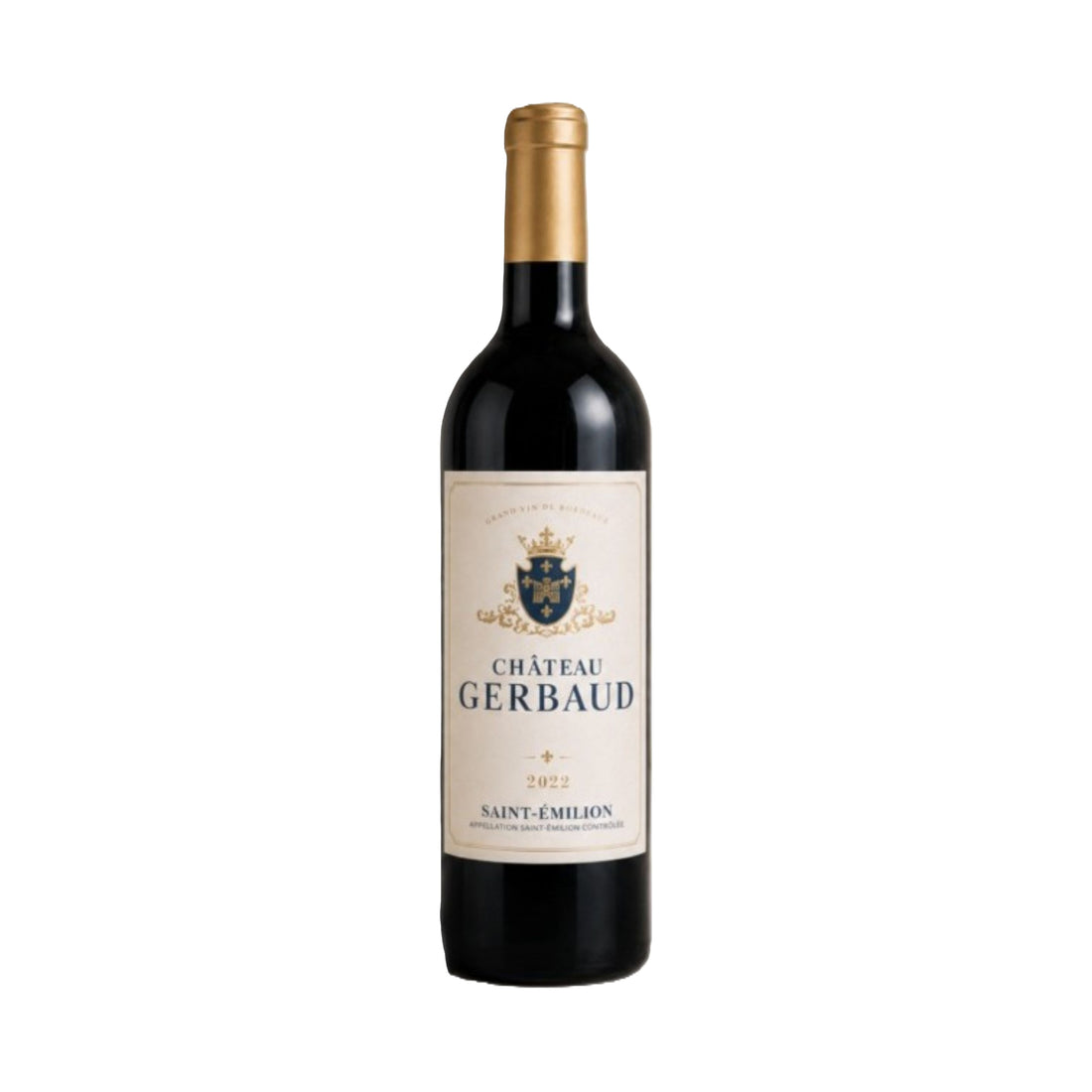
Château Gerbaud Saint-Émilion 2022
 Saint-Émilion, France·Merlot, Cabernet Franc, Cabernet Sauvignon
Add a gift messageFREE
We never include prices or an invoice in the parcel.
Why we chose it“Proper Saint-Émilion from a family château, with the depth and length to prove it. Decant it for Sunday roast lamb, or lay a few bottles down for a couple of years.”
Kelli - Wine Buyer
About this wine
Château Gerbaud Saint-Émilion is a deep garnet, Merlot-led red with a wonderfully complex nose of red fruit, wild strawberry and blackcurrant, lifted by spice and floral notes. After a harmonious start the palate is full-bodied, dense and fresh, with elegant, fleshy tannins that carry it to a remarkably long finish. It shows the richness, elegance and complexity that make this Right Bank appellation so sought after.
The Chabrol family have owned Château Gerbaud since 1956, growing the estate to 15 hectares of 40-year-old vines on clay-limestone soils with a distinctive seam of deep gravel. Merlot, Cabernet Franc and Cabernet Sauvignon are fermented the traditional way in concrete vats with a long maceration, then aged partly in French oak barrels and partly in vat. It is drinking well now and will reward a few more years in the cellar. Open it with roast lamb, a rib of beef or a board of mature hard cheeses.
