

A group of friends gather to taste Rieslings from Germany, Alsace, Australia and New Zealand, discovering why older really is better with one of the world's most underappreciated grapes.
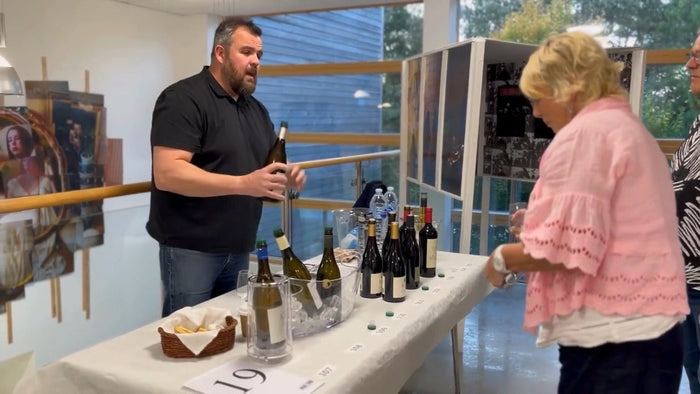
I have a few friends who get together to taste wine when we can. Last night we tasted Rieslings from both the Old World and the New, Old World being European wine countries, New World covering New Zealand, America and Australia. I love the Riesling grape, and I have to say: older the better.
About Riesling
The grape originated from the Rhine in Germany. The fascinating thing about Riesling is that it doesn't need to be messed with, its natural characteristics are enough, without oak or lees ageing. This grape is what they call "naturally expressive": where it's grown is what really matters. It's well known for its kerosene notes. Yes, petrol. And it is good.
Rosealynne, a scientist in our wine group, noted that the petrol note is caused by the compound 1,1,6-trimethyl-1,2-dihydronaphthalene (TDN), which forms from carotenoid precursors via acid hydrolysis during ageing. The grape also shows flowery, perfumed notes, high acidity, and extraordinary versatility, from bone dry to lusciously sweet to sparkling.
The Wines
Main Divide Riesling 2008, Waipara Valley, New Zealand: Gorgeous yellow colour with a tinge of green. The nose leapt out of the glass, honeysuckle, lemon, lime and a hint of kerosene. The palate, however, lacked acidity to balance the sweetness.
Domaine Schlumberger 2007, Alsace: Beautiful golden yellow, a powerful yet delicate nose of pear drops and lemon. Dry, with green apple and sharp acidity. Good length, ideal with food.
Pauletts 2008, Polish River, Clare Valley, Australia: Deep golden colour, stewed apples, floral notes, honeysuckle and that tell-tale hint of kerosene. All followed through on the palate with a medium finish.
Deutschherrenhof 2003, Mosel Saar Ruwer, Germany: Very pale compared to the others. Delicate nose of floral and honeysuckle. Medium acidity, great weight and feel in the mouth, and those delicious kerosene notes.
Dr. Loosen Beerenauslese 2006, Mosel, Germany: The daddy. A nose full of fruit: apples, burnt orange, honey and raisin. Luscious sweetness beautifully balanced by refreshing acidity. A properly grown-up wine.