

Choosing wine from a label is always a bit of a gamble. A tasting note can tell you a wine is bright, savoury or full of dark fruit, but it cannot tell you whether you will love it. The only way to know for sure is to taste it first, and that is exactly what the Somerset Wine Fair is for.
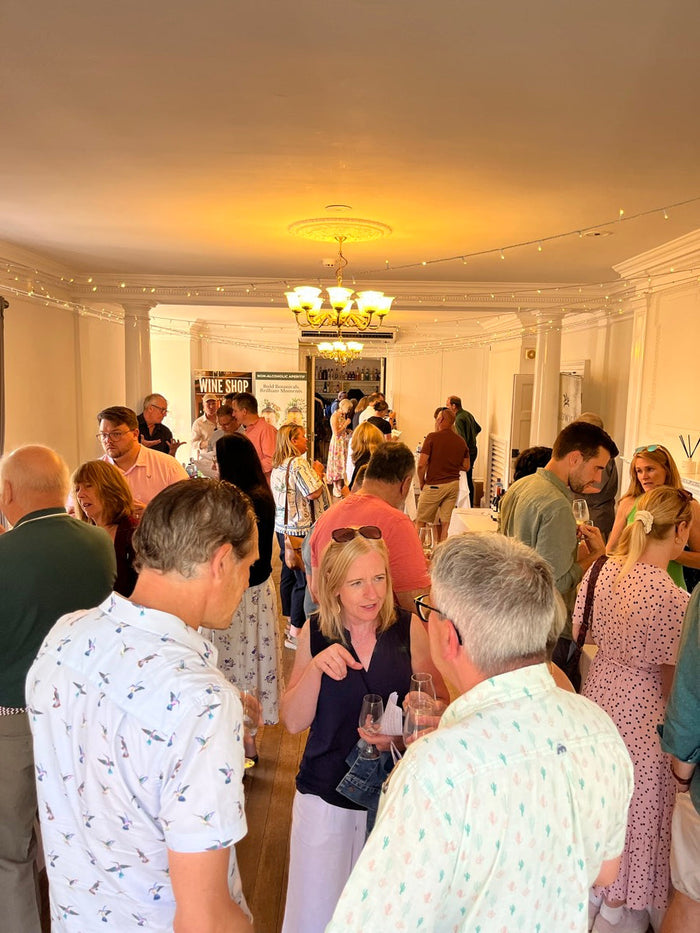
On Friday 23rd October, from 6pm to 9pm, the Somerset Wine Fair Autumn Edition returns to Sidcot Arts Centre in Winscombe. Over 100 wines and spirits from thirteen countries will be open and ready to pour, with the people who make and import them on hand to talk you through each one. Everything you taste can be ordered on the night, so every bottle you take home is one you already know you enjoy.

Taste First, Then Decide
Most of us buy wine in one of two ways. We stick to a handful of names we trust, or we take a chance on something new and hope for the best. A wine fair takes the guesswork out. In one evening you can line up several reds side by side, discover a grape you had never heard of, and decide for yourself how an English sparkling wine compares with the Champagne you usually buy.
It is also the most confident way to stock up. Rather than filling a basket on the strength of a description, you build your order from wines you have tasted, liked and made a note of. With Christmas on the horizon, it is a good moment to plan ahead too: orders placed at the fair usually arrive one to two weeks after the event.
Your Ticket Comes Back to You
Tickets are £28 per person, and when you order on the night, some or all of that comes back off your order:
- Order 12 bottles and £14 of your ticket comes back.
- Order 24 bottles and the full £28 comes back.
So if you were planning to order a couple of cases anyway, your evening of tasting has paid for itself. There are special event offers on the night as well, and delivery is free locally on orders over £79 and free across the UK on orders over £125.
How to Get the Most from a Wine Fair
With more than 100 wines open and three hours on the clock, nobody tastes everything, and nobody should try. A little planning makes the evening more enjoyable and your notes far more useful.
1. Eat before you arrive
There will be bread and palate cleansers, but not a meal. Tasting on an empty stomach tires your palate quickly, so have dinner first.
2. Start light, finish rich
Professional tasters work in an order that keeps the palate fresh: sparkling wines first, then crisp whites, fuller whites and rosé, followed by lighter reds, bigger reds and, finally, sweet and fortified wines. Big, tannic reds and sweet wines coat the mouth, so a delicate white tasted straight after one will seem thin. You do not need to follow the order strictly, but it helps.
3. Look, swirl, smell, sip
Give each glass a moment. Tilt it against a light background to see the colour: a deep, purple-edged red usually points to a young or full-bodied wine, while a white turning golden suggests age or oak. Swirl to release the aromas, then take a proper sniff before you sip, because much of what we think of as flavour is really smell. When you taste, let the wine cover your whole mouth and notice three things: how dry or sweet it is, how fresh the acidity feels, and how long the flavour lingers afterwards. That last one, the finish, is often the clearest sign of quality.
4. Use the spittoon, and do not feel shy about it
Spitting is completely normal at a tasting and nobody pouring will think twice about it. Each measure is small, but across 30 or 40 wines it adds up. Spitting keeps your judgement sharp for the wines you taste later in the evening, and you can always pour away the rest of a glass once you have made up your mind. Sipping water between tables helps too.

5. Make notes you will understand later
By half past eight the wines can start to blur, so write something down for every wine you like. It does not need to be poetic. A simple system works well: one tick for "good", two ticks for "buy", plus a few words to jog your memory, such as "peppery, great with lamb" or "one for Christmas Day". Those notes become your shopping list at the end of the night.
6. Ask the people pouring
This is the part no website can give you. The winemakers and importers behind the tables know these wines inside out. Ask what food they would serve with it, how long it will keep, or what the growing season was like. Ask "if I like this, what else should I try?" and you will often be led to the best discovery of your evening.
7. Pick a theme, then go off script
If 100 wines feels daunting, give yourself a focus: wines for Christmas dinner, reds for the cooler months, or one grape compared across several countries. Then leave room for at least one wine you would never normally choose. Trying it costs nothing extra, and you are not committing to a whole bottle.
Grapes and Regions Worth Seeking Out
Alongside favourites from Spain, Italy, France, Portugal, Germany, Chile, New Zealand, Australia and South Africa, this year's fair includes wines from some of Europe's most exciting lesser-known regions. These are the tables where tasting first really comes into its own, because they are the wines people are least sure about buying unseen.
England, and Somerset in particular
English wine has come a long way in a generation, and some of the most interesting examples are made within a short drive of Winscombe. Four Somerset vineyards are exhibiting this year: Aldwick Estate, Oatley Vineyard, Smith & Evans and Sutton Ridge.
Look out for Bacchus, the aromatic white grape that has become a signature of English still wine, with elderflower, citrus and freshly cut grass, as in Sutton Ridge Bacchus. Oatley's Leonora's is made from Kernling, a rare cool-climate grape related to Riesling. And if bubbles are on your Christmas list, England's traditional method sparkling wines, such as Smith & Evans Higher Plot, are well worth comparing. Explore our English wines, English sparkling wines and the wider Somerset range.
Bulgaria
Bulgaria has been making wine for thousands of years, and its native grapes are finally getting the attention they deserve. Two to know: Mavrud, one of the country's oldest red varieties, which gives deep-coloured wines with blackberry, plum and a savoury, spicy edge; and Melnik, grown in the warm Struma Valley near the Greek border. Melnik 55, an early-ripening offspring of the traditional Broad-leaved Melnik vine, makes smooth reds with black cherry, plum and gentle spice. Try Logodaj Winery Melnik 55 or Georgiev & Milkov Novi Izvor Mavrud, or browse our full Bulgarian range.
Hungary
Hungary is best known for Tokaji, one of the world's great sweet wines. The grape behind it, Furmint, also makes superb dry whites: crisp, mineral and citrusy, with a texture that has drawn comparisons with Chablis. Bodrog Borműhely Dry Tokaj is a lovely introduction, and our Hungarian wines include classic sweet Tokaji Aszú 5 Puttonyos too.
Georgia
Georgia is often called the cradle of wine, with evidence of winemaking stretching back around 8,000 years. Many Georgian wines are still made in qvevri, large clay vessels buried in the ground, a tradition recognised by UNESCO. White grapes left on their skins in qvevri become amber or "orange" wines, golden in colour with a gentle grip and notes of dried apricot, tea and nuts, while the red grape Saperavi gives inky, fruit-rich wines with plenty of structure. If Georgian wine is new to you, the fair is the ideal place to taste it before you commit to a bottle.
Who Will Be Pouring
This year's tables bring together specialist importers, wine houses and the producers themselves. Confirmed so far are Richmond Wine Agencies, Thorman Hunt, Hatch Mansfield, The Jolly Merchants, The Antipodean Sommelier, Astrum Wine Cellars, Les Grands Chais de France and Edmond de Rothschild, alongside Somerset's own Aldwick Estate, Oatley Vineyard, Smith & Evans and Sutton Ridge. More names are still being confirmed, so keep an eye on the fair page for updates.
Two Seated Masterclasses
If you would like to sit down and go a little deeper, two guest producers will each lead a 20-minute talk and tasting in the auditorium, one at 7pm and one at 8pm, each on a different subject. They are a relaxed way to hear how a wine is made and what makes it taste the way it does, from the people who make it. The tasting tables stay open until 9pm, so you will not miss out on the rest of the room.
Bring a Friend Who Has Not Been Before
If you have been to one of our fairs before, you will know how quickly the evening goes. This time, bring along a friend who has never been. There is no better way for them to find out what they really enjoy drinking. Everyone attending needs their own ticket.

The Details
- Date: Friday 23rd October 2026
- Time: 6pm to 9pm, with masterclasses at 7pm and 8pm
- Venue: Sidcot Arts Centre, Bristol Road, Winscombe BS25 1LT, with on-site parking
- Tickets: £28 per person, with £14 back when you order 12 bottles on the night and the full £28 back at 24 bottles
- Exhibitors confirmed so far: Richmond Wine Agencies, Thorman Hunt, Hatch Mansfield, The Jolly Merchants, The Antipodean Sommelier, Astrum Wine Cellars, Les Grands Chais de France, Edmond de Rothschild, Aldwick Estate, Oatley Vineyard, Smith & Evans and Sutton Ridge
- Food: bread and palate cleansers only, so please eat before you arrive
- Age: 18+ only; please bring photo ID if you look under 25
- On the door: no physical ticket needed, we will have your name on the list
If you came to our summer fair, you can relive the wines everyone was talking about in July. And for smaller evenings through the autumn, take a look at our other tasting events.
One evening, over 100 wines, and every bottle you order is one you have already tasted. Book your tickets for the Somerset Wine Fair and we look forward to pouring for you on the 23rd.