

Every October, the Wine Shop celebrates sherry, a wine with a history stretching back to the Phoenicians, a landscape unlike any other in Spain, and a range of styles that runs from bone-dry to lusciously sweet. Come and discover it with us.
Not Just for Christmas
For generations, sherry has been at the heart of special occasions, the base of the Christmas trifle, the drink your grandmother poured when family arrived. But sherry is so much more than nostalgia. It spans an extraordinary range of styles, from the crispest pale fino to the richest, darkest Pedro Ximénez, each shaped not so much by the grape as by the remarkable way in which the wine is made.
Every October the Wine Shop runs a sherry month, tasting a different style each week on our Saturday bench and exploring the history, the production, and the food pairings along the way. This post covers all four weeks, pop in, follow the newsletter, or read on to find out more.
The Story of Sherry
No one knows exactly when sherry was first made, but its origins stretch back to Phoenician traders around 1000 BC. The wine is named after its hometown of Jerez de la Frontera in Andalucía, southern Spain, "sherry" being an anglicised version of "Jerez." Production continued even under the Moorish rule of the eighth century, when consumption was prohibited, and by the later medieval period it was being exported across the world. By the twentieth century sherry was enormously popular, peaking in the 1970s before falling from fashion, a fall that left a generation of extraordinary wines underappreciated, and very good value.
Where Sherry Comes From
Sherry originates in the chalk-white terrain around Jerez de la Frontera. The soil, known as albariza, is the key. Brilliant white and formed from ancient marine sediment, it absorbs the winter rains and then forms a hard crust in summer, protecting the moisture beneath and making it available to the vines during the long dry months. The main grape is Palomino, a fairly neutral variety whose flavour comes less from the fruit itself than from the way the wine is aged. Moscatel and Pedro Ximénez are used for certain sweeter styles.
How Sherry Is Made
The style of sherry depends on how it is aged. Some sherries are aged biologically, beneath a blanket of yeast called flor that coats the surface of the wine and protects it from oxygen, giving characteristic notes of apple skin, almonds, and fresh dough. Others are aged oxidatively, with deliberate exposure to air that develops nutty, caramel, and dried-fruit flavours and deepens the colour from pale gold to rich amber. Many styles combine both approaches at different stages of production.
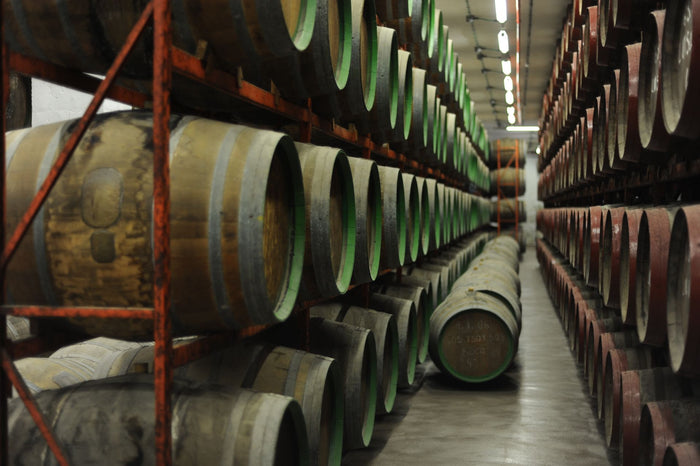
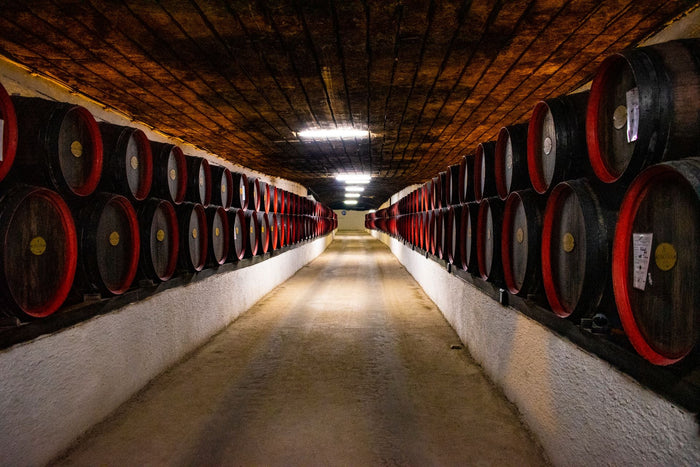
In all cases, sherry is aged in a solera, a system of stacked barrels through which the wine travels as it ages. When wine is drawn off for bottling, it is replaced by younger wine from the row above. The blending is continuous, producing a consistent style year after year while adding layers of complexity that no single vintage could achieve.
Week One: Barbadillo Fino
The opening wine of sherry month is the Barbadillo Fino Sherry, from an award-winning family bodega in Sanlúcar de Barrameda that has been in the Barbadillo family since 1821. Fino is the driest and most delicate style of sherry: the wine is fortified to just below 15.5% abv, a level at which flor can develop, and then aged entirely under that protective blanket of yeast. The flor consumes alcohol and releases the characteristic apple-skin flavours, keeping the wine pale straw in colour and brilliantly fresh.
Sanlúcar de Barrameda, Andalucía, Fino
Pale straw, brilliantly clear, with notes of apple skin, almond, and a bracing saline freshness. Dry, crisp, and alive. Serve chilled and pair with Spanish tapas, Serrano ham, manchego, or seafood.
Order now →Week Two: Mira La Mar Amontillado
Amontillado is one of sherry's most intriguing styles because it lives in two worlds. It begins as a fino, aged under flor and acquiring those characteristic yeasty, apple-skin notes. Then, once the desired character has developed, the wine is fortified further, above 17% abv, which kills the flor. From that point the wine ages oxidatively, developing amber colour, caramel, dried fruit, and nutty flavours that come with exposure to air. The result carries the freshness of biological ageing and the richness of oxidative ageing at once.
Jerez, Andalucía, Amontillado
Eight years in the solera, a combination of biological and oxidative ageing. Dry and amber-coloured, with pronounced notes of almonds, hazelnuts, and sea salt. "Mira La Mar" means "look at the ocean", best enjoyed with white meat, fish, or the finest Spanish tapas.
Order now →Week Three: Romerito Palo Cortado
Palo Cortado is perhaps the most mysterious style in the sherry cellar. Like Amontillado, it begins life under flor, but at some point the flor dies unexpectedly, and the wine is diverted into an oxidative solera. The result carries the elegance and aromatic delicacy of an Amontillado with the fuller body, deeper colour, and greater richness of an Oloroso. It is rare, complex, and rather wonderful.
Jerez, Andalucía, Palo Cortado
Aged 18 years in the solera, rich mahogany in colour. Complex notes of walnuts, orange zest, and dried fruits. Best served at room temperature to bring out the full depth of its oxidative character. Magnificent with mature cheeses, cured meats, or on its own as an aperitif.
Order now →Week Four: Mira La Mar Pedro Ximénez
Pedro Ximénez, always known simply as PX, is in a category of its own. It is made not from Palomino but from the PX grape: small-berried, thin-skinned, and extraordinarily sugar-rich. After harvest the grapes are laid out to dry in the Andalusian sun for several days, their water evaporating until they become raisins with an intense concentration of sugar and flavour. The resulting wine, aged oxidatively in the solera, is almost black in colour, syrupy in texture, and extraordinary in its depth of flavour.
Jerez, Andalucía, Pedro Ximénez
Mira La Mar Pedro Ximénez
Smooth, full-bodied, and intensely flavoured: dates, caramel, roasted nuts, and a long warming finish. Pair with rich desserts, or pour it generously over vanilla ice cream for something genuinely special.
Browse all sherry →